
Research publications, commentaries, conference abstracts, & neurons firing.
Journal Articles
Currently 50+ peer reviewed publications with an h-index of 23 (via Google Scholar)
2026
M Krishnamurthy, S Saha, P Lo, PL Whetzel, T Issabekova, J Ferreris Vargas, J DiGiovanna, MA Haendel, "Enabling Down Syndrome Research through a Knowledge Graph–Driven Analytical Framework" under review arXiv
2025
G Tsueng, E Bullen, C Czech, DWelzel, L Collares, J Lin, E Rodolpho, Z Qazi, N Acosta, L Mayer, S Venkatachari, Z Mitrović Vučičević, P Burman, D Jain, J DiGiovanna, M Giovanni, A Lin, W Van Panhuis, L Hughes, A Su, and C Wu. "The NIAID Discovery Portal: A Unified Search Engine for Infectious and Immune-Mediated Disease Datasets", mSystems 11:e01270-25
V Kovacevic, O Milicevic, N Ilic Raicevic, M Kojicic, A Mijalkovic Lazic, N Skundric and J DiGiovanna "INAEME: Integral Neoantigen Analysis with Entirety of Mutational Events," preprint-only bioRxiv
2024
K Abdilleh, O Khalid, D Ladnier, W Wan, S Seepo, G Rupp, V Corelj, ZF Worman, D Sain, J DiGiovanna, B Press, S Chandrashekhar, E Collisson, KY Cui, A Maitra, PA Rejto, KP White, L Matrisian, S Doss. "Pancreatic Cancer Action Network's SPARK: A Cloud-Based Patient Health Data and Analytics Platform for Pancreatic Cancer" JCO Clinical Cancer Informatics, 2024
2023
S Ahalt, P Avillach, R Boyles, K Bradford, S Cox, B Davis-Dusenbery, RL Grossman, A Krishnamurthy, A Manning, B Paten, A Philippakis, I Borecki, SH Chen, J Kaltman, S Ladwa, C Schwartz, A Thomson, S Davis, A Leaf, J Lyons, E Sheets, JC Bis, M Conomos, A Culotti, T Desain, J DiGiovanna, M Domazet, et. al. "Building a collaborative cloud platform to accelerate heart, lung, blood, and sleep research" Journal of the American Medical Informatics Association 30, 2023
LD Hughes, G Tsueng, J DiGiovanna, TD Horvath, LV Rasmussen, TC Savidge, T Stoeger, S Turkarslan, Q Wu, C Wu, AI Su, L Pache, and the NIAID Systems Biology Data Dissemination Working Group “Addressing barriers in FAIR data practices for biomedical data” Scientific Data 10, 2023
2021
M Bonizzato, ND James, G Pidpruzhnykova, N Pavlova, P Shkorbatova, L Baud, C Martinez-Gonzalez, JW Squair, J DiGiovanna, Q Barraud, S Micera & G Courtine "Multi-pronged neuromodulation intervention engages the residual motor circuitry to facilitate walking in a rat model of spinal cord injury" Nature Communications 12, 1925, 2021.
AR Kerlavage, AC Kirchhoff, JM Guidry Auvil, NE Sharpless, KL Davis, K Reilly, G Reaman, L Penberthy, D Deapen, A Hwang, EB Durbin, SL Gallotto, R Aplenc, SL Volchenboum, AP Heath, BJ Aronow, J Zhang, O Vaske, TA Alonzo, PC Nathan, JN Poynter, G Armstrong, EE Hahn, KJ Wernli, C Greene, J DiGiovanna, AC Resnick, ER Shalley, S Nadaf, WA Kibbe “Cancer informatics for cancer centers: Scientific drivers for informatics, data science, and care in pediatric, adolescent, and young adult cancer” JCO Clinical Cancer Informatics 5: 881-896, 2021
2020
JS Barnholtz-Sloan, DE Rollison, A Basu, AD Borowsky, A Bui, J DiGiovanna, M Garcia-Closas, JM Genkinger, T Gerke, M Induni, JV Lacey Jr, L Mirel, JB Permuth, J Saltz, EA Shenkman, CM Ulrich, WJ Zheng, S Nadaf, and WA Kibbe "Cancer Informatics for Cancer Centers (CI4CC): Building a Community Focused on Sharing Ideas and Best Practices to Improve Cancer Care and Patient Outcomes" JCO Clinical Cancer Informatics 4, 108-116, 2020
2018
M Bonizzato, G Pidpruzhnykova, J DiGiovanna, et al. "Brain-controlled modulation of spinal circuits improves recovery from spinal cord injury" Nat Commun 9, 3015, 2018.
E Martin Moraud, J von Zitzewitz, J Miehlbradt, S Wurth, E Formento, J DiGiovanna, M Capogrosso, G Courtine and S Micera. "Closed-loop control of trunk posture improves locomotion through the regulation of leg proprioceptive feedback after spinal cord injury" Scientific Reports 8, 76, 2018
2017
JW Lau, E Lehnert, A Sethi, R Malhotra, G Kaushik, Z Onder, N Groves-Kirkby, A Mihajlovic, J DiGiovanna, M Srdic, D Bajcic, J Radenkovic, V Mladenovic, D Krstanovic, V Arsenijevic, D Klisic, M Mitrovic, I Bogicevic, D Kural and B Davis-Dusenbery; for The Seven Bridges CGC Team, "The Cancer Genomics Cloud: Collaborative, Reproducible, and Democratized—A New Paradigm in Large-Scale Computational Research" Cancer Res; 77(21); e3–6, 2017
2016
J DiGiovanna, N Dominici, L Friedli, J Rigosa, S Duis, J Kreider, J Beauparlant, R van den Brand, M Schieppati, S Micera and G Courtine. "Engagement of the Rat Hindlimb Motor Cortex across Natural Locomotor Behaviors" J Neuroscience 36 (40), 10440-10455, 2016
TAK Nguyen, J DiGiovanna, S Cavuscens, M Ranieri, N Guinand, R van de Berg, J Carpaneto, H Kingma , JP Guyot, S Micera, AP Fornos. "Characterization of pulse amplitude and pulse rate modulation for a human vestibular implant during acute electrical stimulation" J Neural Engineering 13 (4), 046023 2, 2016
EM Moraud, M Capogrosso, E Formento, N Wenger, J DiGiovanna, G Courtine, and S Micera. "Mechanisms underlying the neuromodulation of spinal circuits for correcting gait and balance deficits after spinal cord injury" Neuron, Volume 89, Issue 4, 814 - 828, 2016
N Wenger, E Martin Moraud, J Gandar, P Musienko, M Capogrosso, L Baud, CG Le Goff, Q Barraud, N Pavlova, N Dominici, IR Minev, L Asboth, A Hirsch, S Duis, J Kreider, A Mortera, O Haverbeck, S Kraus, F Schmitz, J DiGiovanna, R van den Brand, J Bloch, P Detemple, SP Lacour, E Bézard, S Micera, and G Courtine. "Spatiotemporal neuromodulation therapies engaging muscle synergies improve motor control after spinal cord injury" Nature medicine, 2016;22(2):138-145, 2016
J DiGiovanna, TAK Nguyen, N Guinand, A Pérez-Fornos, S Micera "Neural network model of vestibular nuclei reaction to onset of vestibular prosthetic stimulation" Frontiers in bioengineering and biotechnology 4:34, 2016
2015
J Rigosa, A Panarese, N Dominici, L Friedli, R van den Brand, J Carpaneto, J DiGiovanna, G Courtine, and S Micera, “Decoding bipedal locomotion from the rat sensorimotor cortex” J Neural Engineering, vol 12, issue 056014, 2015
2014
N Wenger, E Martin-Moraud, S Raspopovic, M Bonizzato, J DiGiovanna, P Musienko, S Micera, G Courtine, “Closed-loop neuromodulation of spinal sensorimotor circuits restores refined locomotion after complete spinal cord injury” Science Translational Medicine, vol. 6, issue 255, 2014
TAK Nguyen, M Ranieri, J DiGiovanna, O Peter, V Genovese, A Perez Fornos, et al., "A Real-Time Research Platform to Study Vestibular Implants With Gyroscopic Inputs in Vestibular Deficient Subjects" IEEE BioCAS, vol. 8, pp. 474-484, Aug, 2014
W Poppendieck, A Sossalla, M-O Krob, C Welsch, TAK Nguyen, W Gong, J DiGiovanna, S Micera, DM Merfeld, and K-P Hoffmann, "Development, manufacturing and application of double-sided flexible implantable microelectrodes" Biomedical Microdevices, pp. 1-14, 2014
2013
D Borton, M Bonizzato, J Beauparlant-Heutschi, J DiGiovanna , EM Moraud, N Wenger, P Musienko, IR Minev, SP Lacour, S Micera, J del R Millán, and G Courtine, “Corticospinal neuroprostheses to restore locomotion after spinal cord injury” Neuroscience Research, 2013
2012
G Courtine, S Micera, J DiGiovanna , and J del R Millan, “Brain-machine interface: closer to therapeutic reality?” Lancet (comment), December 17, 2012
R van den Brand*, J Heutschi*, Q Barraud, J DiGiovanna, K Bartholdi, M Huerlimann, L Friedli, I Vollenweider, E Martin Moraud, S Duis, N Dominici, S Micera, P Musienko, G Courtine "Restoring Voluntary Control of Locomotion after Paralyzing Spinal Cord Injury" Science, vol 336, pp. 1182-1185, 2012
J DiGiovanna, J Carpanteto, S Micera, and DM Merfeld, "Alignment of angular velocity sensors for a vestibular prosthesis" Journal of NeuroEngineering & Rehabilitation, 9:14, 2012
2010
J DiGiovanna, W Gong, C Haburcakova, V Koegler, J Carpaneto, V Genovese, DM Merfeld, A Demosthenous, JP Guyot, K-P Hoffmann, A Berthoz, M Morari, and S Micera, “Development of a closed-loop neural prosthesis for vestibular disorders” J Automatic Control v. 20, p. 27-32, 2010
J DiGiovanna, P Rattanatamrong, M Zhao, B Mahmoudi, L Hermer, R Figueiredo, JC Principe, J Fortes, and JC Sanchez, "Cyber-workstation for computational neuroscience" Frontiers in Neuroengineering, 2010
2009
JC Sanchez, B Mahmoudi, J DiGiovanna, and JC Principe, "Exploiting Co-Adaptation for the Design of Symbiotic Neuroprosthetic Assistants" Neural Networks, vol. 22, pp.305-315, 2009
J DiGiovanna, B Mahmoudi, J Fortes, JC Principe, and JC Sanchez, "Co-adaptive Brain-Machine Interface via Reinforcement Learning" IEEE Transactions on Biomedical Engineering, vol. 56, pp. 54-64, 2009
Peer Reviewed Conference Proceedings
2024
M Rankovic, N Vukojicic, N Ilic Raicevic, V Matovic, D Sain, J DiGiovanna, B Davis-Dusenbery. "CGC-hosted comprehensive pipeline for spatial transcriptomics analysis" American Association for Cancer Research (AACR), 2024
V Petrosyan, V Kovacevic, P Obradovic, C Fisher, Z Worman, D Sain, J DiGiovanna, B Davis-Dusenberry, Aleksandar Milosavljevic. "CTD2" Connects the Dots" to capture disease genes in complex networks and its application on the Cancer Genomics Cloud" American Association for Cancer Research (AACR), 2024
K Abdilleh, Z Worman, R Beck, C Fisher, D Sain, J DiGiovanna, L Matrisian, S Doss, Brandi Davis-Dusenbery. "Leveraging real-world pancreatic cancer datasets to drive drug discovery and patient health" American Association for Cancer Research (AACR), 2024
2023
N Vukojicic, A Danicic, Z Worman, R Beck, D Veljkovic, M Matic, J DiGiovanna, B Davis-Dusenbery “Highly customizable multi-sample single cell RNA-Seq pipeline on the CGC” American Association for Cancer Research (AACR), 2023
D Higgins, J-P Thibert, M Mattioni, J DiGiovanna, RL Grossman, BK Farrow, E Wenger, S Volchenboum, RJ Carroll, MA Haendel “Gabriella Miller Kids First Data Resource Center (KFDRC): Empowering discovery across germline and somatic variation in pediatric cancer” American Association for Cancer Research (AACR), 2023
S Koc, V Varjacic, M Rankovic, M Slavkovic-Ilic, A Danicic, S Black, N Ohashi, T Sarkar, Z Worman, J DiGiovanna; “Collaborating to ensure data-driven drug discovery on the Cancer Genomics Cloud: Realizing the possibilities for MoDaC and ATOM” American Association for Cancer Research (AACR), 2023
2022
S Koc, J Babic, N Nikolic, A Stankovic, D Ventre, M Ray, Z F Worman, S Lakshmi Subramanian, D A Dean, J DiGiovanna, B Davis Dusenbery, "The SB Image Processing Toolkit: Machine learning for cancer research on the CGC" American Association for Cancer Research (AACR), 2022
M Ray, S Lakshmi Subramanian, D Roberson, Z Worman, D A Dean, S Koc, J DiGiovanna, B Davis-Dusenbery, "The Cancer Genomics Cloud enables bioinformatics training in a hybrid educational world" American Association for Cancer Research (AACR), 2022
K Abdilleh, O Khalid, D Ladnier, W Wan, S Seepo, G Rupp, V Corelj, Z Worman, B Press, J DiGiovanna “PanCAN SPARK: A cloud-based health data integration platform for pancreatic cancer data” American Association for Cancer Research (AACR), 2022
Z Worman, M Ray, N Miletic, M Kovačević, A Stankovic, N Ilic Raicevic, D Ventre, S Subramanian, J Randjelovic, J DiGiovanna, B Davis-Dusenbery “Variant analysis for exploration of cancer datasets on the Cancer Genomics Cloud, powered by Seven Bridges” Cancer Genomics Consortium, 2022
2021
S Lakshmi Subramanian, M Ray, J DiGiovanna, J Radenkovic, M Tosic, N Mirkovic, M Stanojevic, M Trboljevac, V Andjus, A Stelkic, B Davis-Dusenbery, "The Cancer Genomics Cloud: A secure and scalable cloud-based platform to access, share and analyze multi-omics datasets" American Association for Cancer Research (AACR), 2021
S Koc, M Lloyd, S Neuhauser, J Noodbakhsh, A Srivastava, X Yi Woo, R Jeon, J Grover, S Seepo, C Frech, J DiGiovanna, PDXNet Consortium, Y A Evard, T Wallace, J Moscow, J H Doroshow, N Mitsuade, S Kaochar, C Pan, M S Chen, L Carvarjal-Carmona, A Welm, B Welm, M T Lewis, G Ramaswamy, L Ding, S Li, M Herlyn, M Davies, J Roth, F Meric-Bernstam, P Robinson, C J Bult, B Davis-Dusenbery, D A Dean, J H Chuang, "Advancing PDX research through model, data, and bioinformatics with the PDXNet Portal" American Association for Cancer Research (AACR), 2021
2013
J Lee, J DiGiovanna, L Friedli, G Courtine, and S Micera, "Multi-Unit Firing Rate Features in Hindlimb Sensory-Motor Cortex Reflect Over-Ground Locomotion in Rats" IEEE EMBC Conf on Neural Eng, San Diego 2013
E Martin Moraud, N Wenger, J Gandar, J DiGiovanna, P Musienko, G Courtine, and S Micera, "A Real-Time Platform for Studying the Modulatory Capacity of Epidural Stimulation after Spinal Cord Injury" IEEE EMBC Conf on Neural Eng, San Diego 2013
TAK Nguyen, W Gong, W Poppendieck, J DiGiovanna, and S Micera, "Investigating Ocular Movements and Vestibular Evoked Potentials for a Vestibular Neuroprosthesis: Response to Pulse Trains and Baseline Stimulation" IEEE EMBC Conf on Neural Eng, San Diego 2013
2012
TAK Nguyen, J DiGiovanna, DM Merfeld, and S Micera, "Comparing Artifact Reduction Methods for Recording Vestibular Evoked Potentials in a Vestibular Neuroprosthesis," IEEE EMBC Conference, San Diego 2012
2011
K-P Hoffmann, W Poppendieck, S Tätzner, J DiGiovanna, MI Kos, N Guinand, J-P Guyot, and S Micera, "3D Hybrid Electrode Structure as Implantable Interface for a Vestibular Neural Prosthesis in Humans," IEEE EMBC Conference, Boston 2011
TAK Nguyen, V Kögler, J DiGiovanna and S Micera, "Finding Physiological Responses in Vestibular Evoked Potentials," IEEE EMBC Conference, Boston 2011
V Kögler, TAK Nguyen, J DiGiovanna, and S Micera, "Recording Vestibular Evoked Potentials Induced by Electrical Stimulation of the Horizontal Semicircular Canal in Guinea Pig," IEEE EMBS Conference on Neural Engineering, Cancun 2011
2010
P Rattanatamrong, P Raiturkar, M Zhao, B Mahmoudi, J DiGiovanna , JC Principe, R Figueiredo, JC Sanchez, J Fortes, "Model Development, Testing and Experimentation in a CyberWorkstation for Brain-Machine Interface Research," in IEEE EMBC Conference, Buenos Aires, Argentina, 2010
2009
J DiGiovanna, B Mahmoudi, JC Principe, and JC Sanchez, "Quantifying Neuronal Important in Value-Based Brain-Machine Interfaces," in IEEE EMBS Conference on Neural Engineering, Antalya, Turkey, 2009
2008
J DiGiovanna, L Citi, K Yoshida, J Carpaneto, JC Principe, JC Sanchez, and S Micera, "Inferring the Stability of LIFE through Brain-Machine Interfaces," in International Conference of the IEEE EMBS Vancouver, 2008
M Zhao, P Rattanatamrong, J DiGiovanna, B Mahmoudi, R Figueiredo, JC Sanchez, JC Principe, and J Fortes, "BMI Cyberworkstation: Enabling Dynamic Data-Driven Brain-Machine Interface Research Through Cyberinfrastructure," in IEEE Engineering in Medicine & BiologyVancouver, 2008
B Mahmoudi, J DiGiovanna, JC Principe, and JC Sanchez, "Neural Tuning in a Reinforcement Learning-Based Brain Machine Interface," in IEEE EMBC Conference, Vancouver, 2008
B Mahmoudi, J DiGiovanna, JC Principe, and JC Sanchez, "Co-Adaptive Brain-Machine Interfaces via Reinforcement Learning," in Neural Interfaces Conference, Cleveland, Ohio, 2008
2007
J DiGiovanna, B Mahmoudi, J Mitzelfelt, JC Sanchez, and JC Principe, "Brain-Mchine Interface Control via Reinforcement Learning," in IEEE EMBS Conference on Neural Engineering Kohala Coast, 2007.
B Mahmoudi, J DiGiovanna, JC Principe, and JC Sanchez, "Neuronal Shaping in a Co-Adaptive Brain Machine Interface," in COSYNE, Salt Lake City, Utah, 2007
J DiGiovanna, L Marchal, P Rattanatamrong, M Zhao, S Darmanjian, B Mahmoudi, JC Sanchez, JC Principe, L Hermer-Vazquez, R Figueiredo, and J Fortes, "Towards Real-Time Distributed Signal Modeling for Brain Machine Interfaces," in International Conference on Computational Science, 2007
2006
J DiGiovanna, JC Sanchez, and JC Principe, "Improved Linear BMI Systems via Population Averaging," in International Conference of the IEEE EMBS, New York, 2006
J DiGiovanna, JC Sanchez, B Fregly, and JC Principe, "Arm Motion Reconstruction via Feature Clustering in Joint Angle Space," in IEEE International Joint Conference on Neural Networks Vancouver, 2006
PhD Dissertation
J DiGiovanna, "Changing the Brain Machine Interface Paradigm: Co-adaptation based on Reinforcement Learning", Ph. D. Dissertation, University of Florida, Gainesville, FL [abstract only due to publishing agreements]
Disclaimer: The documents distributed here have been provided as a means to ensure timely dissemination of scholarly and technical work on a noncommercial basis. Copyright and all rights therein are maintained by the authors or by other copyright holders, notwithstanding that they have offered their works here electronically. It is understood that all persons copying this information will adhere to the terms and constraints invoked by each author's copyright. These works may not be reposted without the explicit permission of the copyright holder. (Notice borrowed from Peter Dayan).

Research
Prior to industry, I worked for a decade in academia with focus on applying reinforcement learning algorithms to develop neuroprosthetic devices.
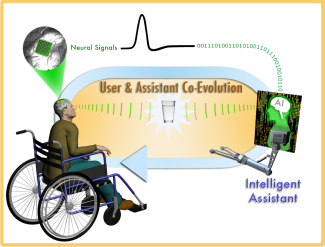
Co-adaptive prosthetic control
Synergistic adaptation toward control is an artificial intelligence and a user learning together to solve problems. This co-adaptation increases overall control capabilities for new environments and/or changing control signals. Specifically, the artificial intelligence can adapt to assist more or less based on the user's current needs and abilities. Unfortunately this is no free lunch - the costs of co-adaptation include increased system complexity and potential instability - both intelligences must share common goals to develop learning synergies. We’ve shown this control architecture for online robot control using neural states. However, the architecture has implications for multiple other AI configurations.
Vestibular prosthetics
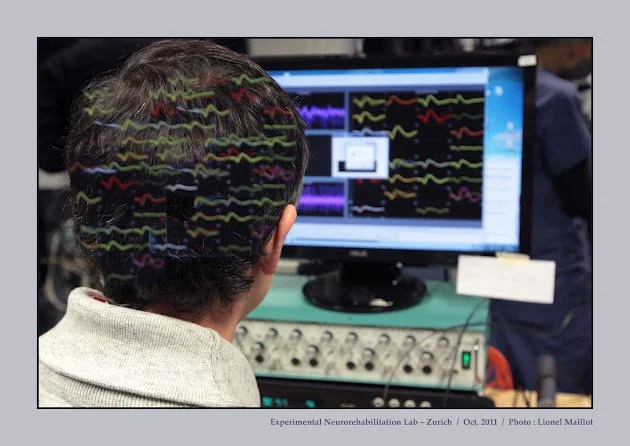
The CLONS project developed suitable technological solutions to increase the quality of life of people affected by vestibular disorders. Specifically, an innovative closed-loop sensory neural prosthesis has been developed for testing in animal models. Furthermore, these technologies are currently being implemented in the clinic (by the teams at University Hospital of Geneva and Maastricht University). This prosthesis partially restores vestibular information by electrically stimulating nerves connected to the semicircular canals. The stimulation patterns are based on information provided by inertial sensors of the user’s head rotations. There are exciting research areas in this field in terms of stimulation parameters, efficiency, specificity, and changes over time.
Listening to the brain
Here are some brief recordings of the sound of neurons. Action potentials are an electrical signal and can be replayed as sound. Experts can hear the differences between multiple units (neurons) recorded by the same electrode. Below, I created frequency-shifted version (like an old NES game) of a raw recording, where each neuron has a unique tone. The activity of these neurons occurred during initiation and continuation of bipedal locomotion. The modification highlights neuron interactions. Can you hear when the brain says go?
Brain-spinal interfaces (BSI)
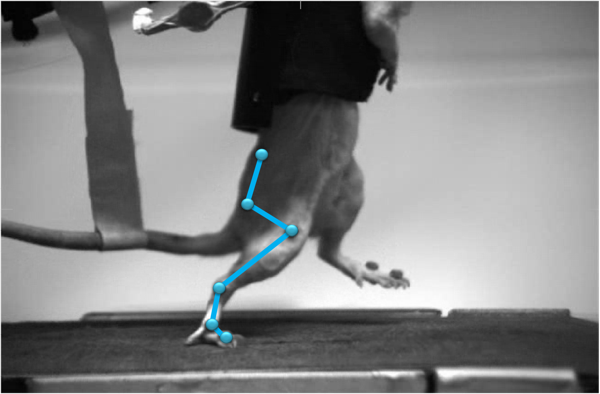
Brain-machine interfaces typically aim to replace an aspect of body function by connecting the user's nervous system with external prosthetics. The NEUWalk Project developed brain-spinal interfaces that restore body function by providing a new pathway between the brain and spinal cord which bypasses an injury site. This strategy will exploit existing, functional spinal circuitry and also provide physiological benefits for the patient. Recent spinal cord injury therapy breakthroughs using a novel, multi-pronged neurorehabilation approach showed that rats with completely paralyzing spinal cord injury can walk again after a combination of traditional physical therapy, pharmacology, and epidural electrical stimulation. The integration of BSI with neurorehabilitation has facilitated patients gaining voluntary control of therapy and eventually locomotion. This was later commercialized by Onward Medical and is currently in patients there and within clinical trials worldwide.

let’s work together
networking
Happy to connect with new people on LinkedIn, I’m also on the Rands Leadership and Acquired slack workspaces (jack_digiovanna).